
85% of cancer patients receive care in community settings like yours. Clinical trials have not kept up.
Access to clinical trials has historically been concentrated in academic medical centers institutions with dedicated research coordinators, trial infrastructure, and the staff to manage it. The community oncology clinics where most patients actually receive care have been left out. That's not a gap. It's a systemic failure.
"Fewer than 5% of eligible patients ever enroll in a clinical trial. Most never hear about one."
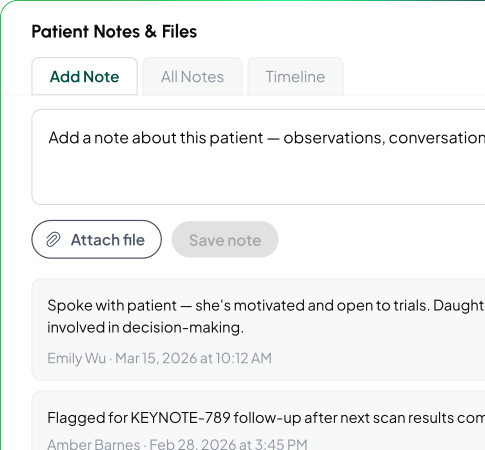
Multichannel support — phone, video, SMS, email — with multilingual translation.
Individualized evaluation and counseling on food insecurity, travel, and lodging needs.
Personalized support to help sites manage logistics and daily operations.
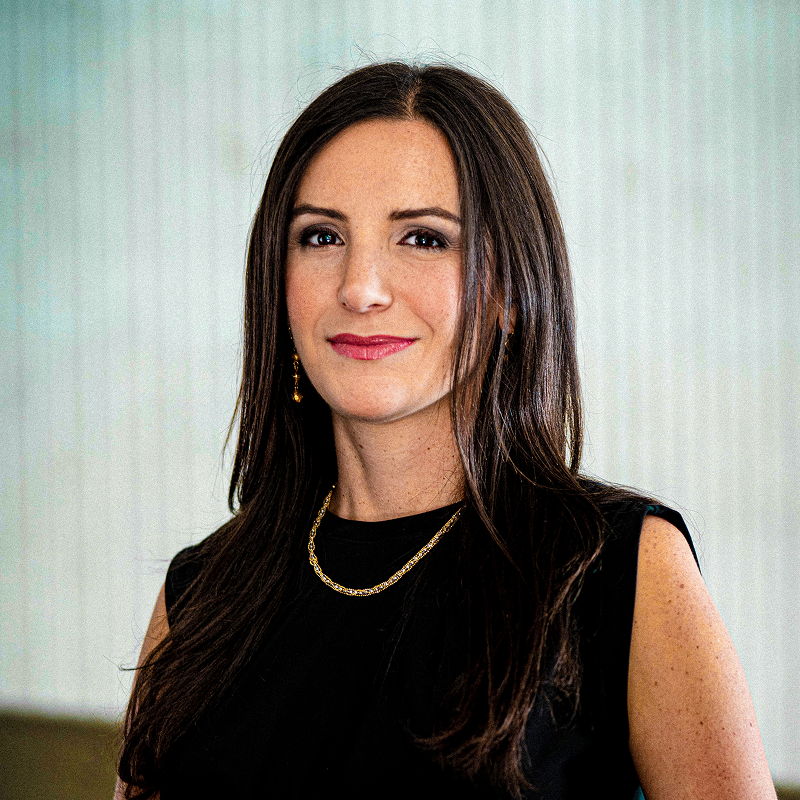
“Access to innovation should be the standard, not the exception. I founded Trial Library because as a physician-scientist, I witnessed firsthand the gap between the impact of clinical trials and the patients who never access them. We're not building another referral tool. We're building the infrastructure that makes clinical research a core part of standard care, starting in the communities that have been left out the longest.”
Frequently
Asked Questions
We know clinical trial infrastructure can feel complex. We’ve curated our most frequently asked questions to get clear, straightforward answers about how Trial Library works for your team.
If you observe an issue in our search results, you can click the three vertical dots near each listing (⋮) to report a problem or suggest an edit.
You can also always contact us at providers@triallibrary.com.
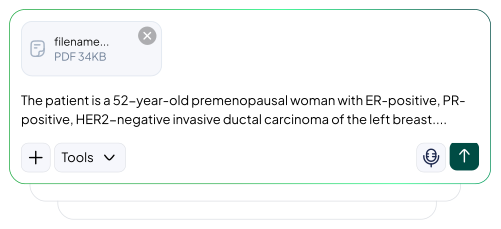
Trial Library asks providers key attributes about a patient’s clinical history to render the right recruiting trial, faster. Trial Library’s AI-enhanced platform will curate clinical data from clinical trial listings and partner with tumor type subject matter experts to improve the accuracy and relevance of displayed results.
Trials in recruiting status and not yet recruiting status are added to Trial Library within 4 weeks of appearing on clinicaltrials.gov. Trial Library works with sponsors and trial sites to augment and validate data from clinicaltrials.gov.
Trial Library’s Trial Search displays all interventional treatment trials for participants over the age of 18. Phase 1-3 trials from all sponsors with sites in the US are included in our results. The trials presented are cancer-directed treatment trials.
Currently, Trial Library supports searches across multiple clinical indications and is actively expanding. The platform is on track to support the entire oncology therapeutic area.
Our ally navigators serve as liaisons for the patient and clinical trial site.
Patient support:
- We evaluate social needs and provide individualized counseling to the patient.
Trial site support:
- We deliver all relevant medical records to the trial study teams.
Provider support:
- We keep you up-to-date on the patient’s status and work with the patient to schedule a follow-up appointment at the provider’s practice during or after the clinical trial.
Simply select the trial to which you want to refer the patient and provide the patient’s information. After you refer the patient, Trial Library will contact your staff to collect patient records to complete the transfer to the site you selected.
If you have a patient that is a strong potential match for a clinical trial, you should first discuss the trial with your patient. Trial Library does not approach patients first. Trial Library approaches patients after a provider or staff introduces the study to the patient.
You can provide the patient with trial information as well as information on Trial Library’s navigation support resources.
If the patient is interested in participating in the clinical trial, you should refer them to the trial through Trial Library’s website.
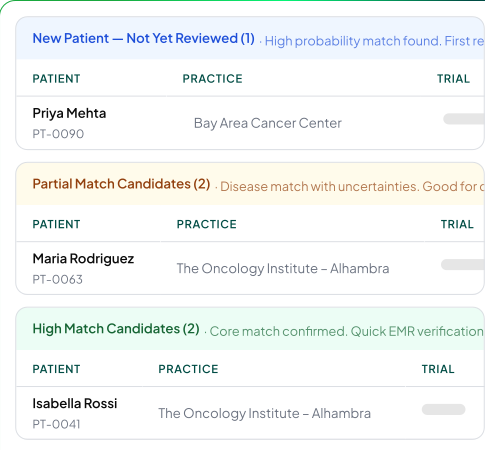
Yes, Trial Library’s pre-screening platform can support patient identification. We will identify a shortlist of patients that match the trial criteria and then work with your staff to answer remaining questions about patient status to confirm strong potential matches for the clinical trial.
The method and process of pre-screening patients is up to you and your practice. Pre-screening can be a combination of manual chart review and running queries in your EMR to identify potentially eligible patients.
Trial Library is able to deploy its pre-screening platform to support pre-screening, helping minimize any burden for you and your staff. To save time and effort, you can delegate most pre-screening activities to Trial Library. Learn more
Please remember you should submit referrals via Trial Library, if clinically appropriate, shortly after discussing with your patient.