Eight out of ten patients who enroll in a clinical trial do so because their provider told them about it.
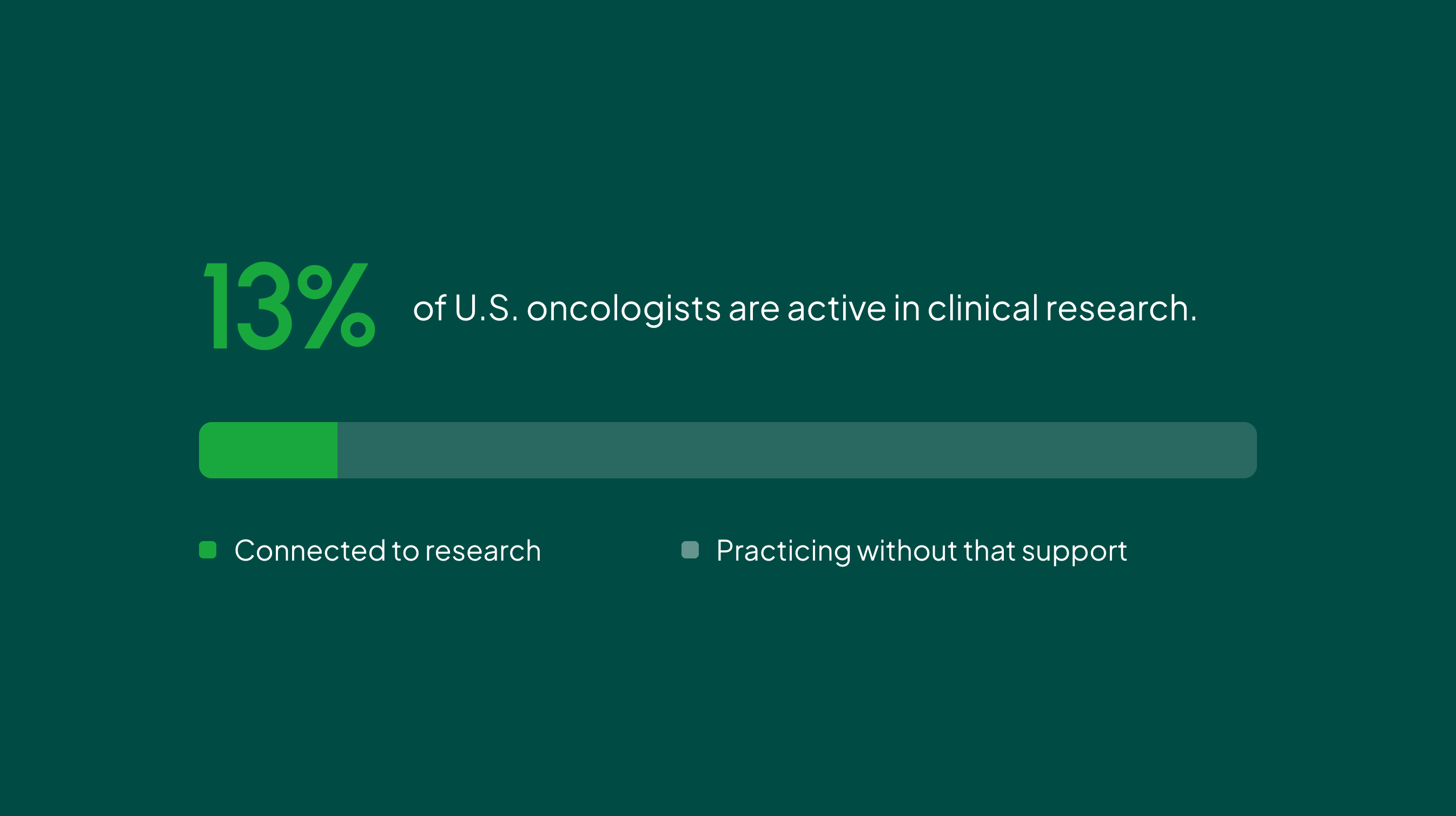
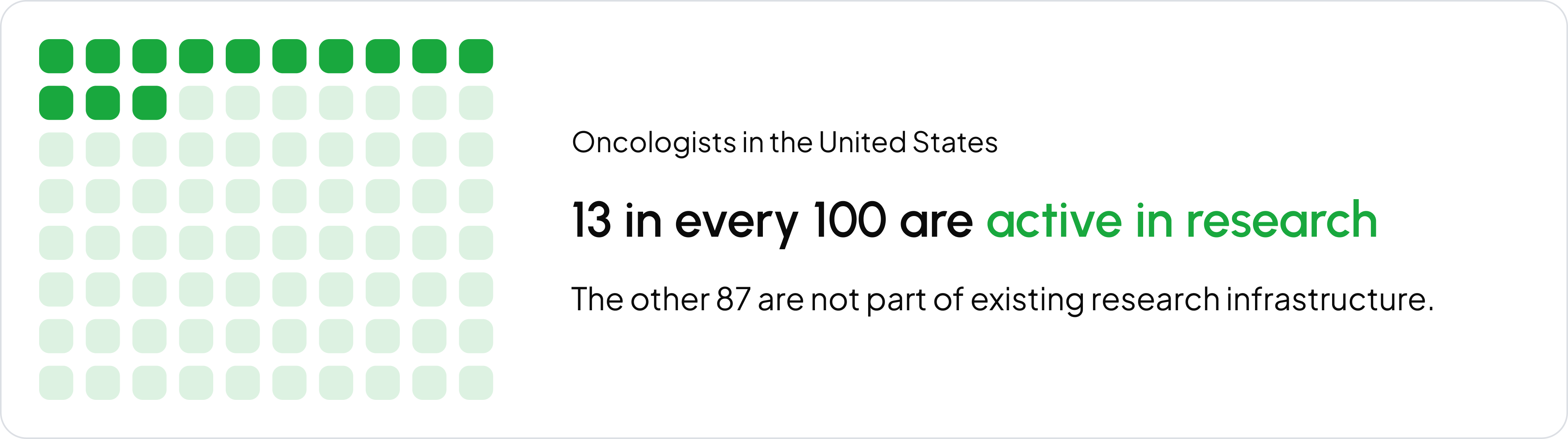
That single fact shapes how I think about almost everything we do at Trial Library. Clinical trial access is not primarily a patient awareness problem. It is a provider engagement problem. And when only 13% of oncologists in this country are actively involved in clinical research, we have a structural challenge that no patient-facing app or awareness campaign can fully solve.
The Provider-First Reality
The data on this is consistent and has been for years. Patients trust their oncologists. When an oncologist says "there's a trial I'd like you to consider," patients listen. When an oncologist does not bring up clinical research, because they are unsure of what trials are available, patient's miss out on promising treatment options.
This is not a criticism of oncologists. It is a description of a system that has been designed, largely by accident, in a way that concentrates clinical research capacity in a small number of research-capable and well-funded health systems. The oncologist in a community practice seeing 30 patients a day that lacks a dedicated research coordinator, a relationship with a sponsor, and protected research time, is less likely to offer clinical trials to their patients. The barriers are structural, not motivational.



.png)